

Green DeWitt: Founding Gonzales and Planting a Seed of Rebellion
“Every individual has a place to fill in the world, and is important, in some respect, whether he chooses to be so or not.” —Nathaniel Hawthorne

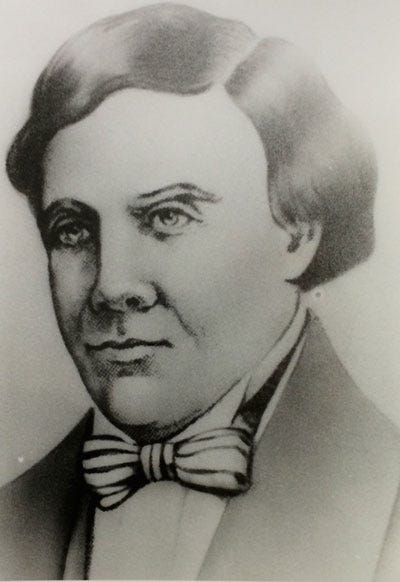

“Of all the colonies founded upon these [empresario] grants, Austin’s was by far the most important. Next to it in point of success, influence, and historical interest must be ranked the one lying just west of it, founded by Green De Witt.” (De Witt’s Colony)
February 12 marks a birthday that we don’t usually celebrate as one of the events that led to the Texas Revolution. Yet, February 12, 1787, recorded the birth of an important piece of the puzzle of Texas history—the birth of the man who founded the town and settled the inhabitants who would fire the first shot of the Texas Revolution, a battle now known as the “Lexington of Texas.” On that day, Green DeWitt, the second most important empresario in Texas history, was born.
Historical Context: The U.S., Kentucky, Missouri, Mexico, and Texas in 1787
In 1787, the United States was 11 years old. That year, the Constitutional Convention met in Philadelphia to address the problems with the Articles of Confederation, ratified 6 years before, and to draft the new constitution—the United States Constitution—which was signed that year and ratified in 1788. Kentucky, Missouri, and Texas were not yet part of the Union at that time.
As part of Virginia, Kentucky was already part of the United States, but was only admitted as the 15th state in 1792. Missouri was part of the Louisiana Territory, which had been transferred from France to Spain in 1762, reverted to French control in 1800, and became American in 1803 following the Louisiana Purchase. Missouri became the 24th state of the Union in 1821.
Texas was under Spanish rule until Mexico gained its independence from Spain in 1821. In 1824, the state of Coahuila and the former Spanish province of Texas were combined to form the Mexican state of Coahuila and Texas (Coahuila y Tejas).
Texas and the Empresario System
After Mexico gained its independence, its government had difficulty recruiting Mexican families who wanted to settle in Texas. The territory was vast and poorly defended because it was underpopulated. That was already a problem under Spanish rule, and the Mexican government decided to follow in the footsteps of Spain and encourage American immigration with the immigration laws of 1823 and 1824:
“This law [of 1823] invited Catholic immigrants to settle in Mexico; provided for the employment of agents, called empresarios, to introduce families in units of 200; defined the land measurement in terms of labores (177 acres each), leagues or sitios (4,428 acres), and haciendas (five leagues each); and defined the privileges and certain limitations of immigrants and empresarios.”
In 1823, Mexican Emperor Agustín de Iturbide abdicated. In 1824, Mexico adopted a new constitution and a federal system of government. The Colonization Law of 1824 empowered the states to regulate immigration within their borders, subject to certain limits imposed by federal law. Coahuila and Texas largely kept the same provisions as the federal law.
Empresarios were land agents who contracted with the Mexican government to bring families to colonize Texas. They worked with the state land commissioner and surveyors to issue land titles to settlers. In exchange for their success, they were given premium land. However, if they failed to meet the number of families specified in their contract, they could lose everything. The incentives were high for empresarios: They could receive five leagues of land (about 22,140 acres) for each one hundred families they settled (Stephen F. Austin to James W. Breedlove, personal communication, November 12, 1829).
Edward Albert Lukes explained:
“The [1824 Colonization] law authorized an “empresario,” under contract with the government, to introduce at his own expense a specific number of families into a designated area within a given period of time. The empresario was compensated by receiving land from the government, based on the number of families he introduced.” (Emphasis added.)
For the settlers, too, both rewards and risks were high. They were moving to an area with little population and where Indians could attack. But they could acquire premium land very cheaply. The fees (some of which were paid to the empresario) totaled $46 for a quarter league and $61 for a full league of land.
“[L]and in Texas was more attractive than land in the United States because of its cost. The price of land in the United States, at this time, was $1.25 per acre if purchased from the public domain. In Texas the price per acre was much cheaper. The purchase of a quarter league of land amounted to four and two-tenths of a cent per acre. The purchase of a full league of land amounted to one and four-tenths cent per acre.”
In addition, the settlers “were to be free from all duties upon agriculture and industry, and free from all general taxes for a period of ten years.”
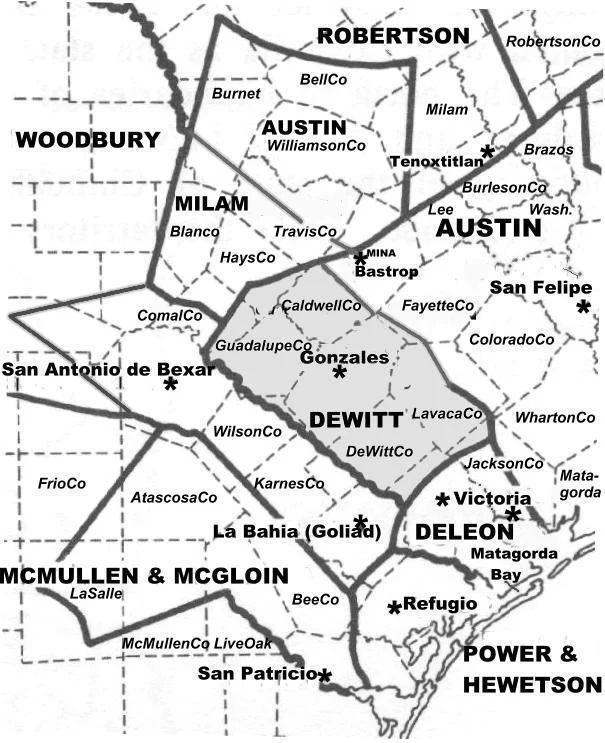
The best-known empresario is Stephen F. Austin, who took over his father Moses Austin’s empresario contract to establish the first and largest colony in Mexican Texas—the one that brought the first 300 settlers (the Old 300) to Texas and 966 families by 1834. Another important colony whose capital would become the town to fire the first shot in the Texas Revolution was the DeWitt Colony.
The Birth of an Empresario - Entrepreneurship, Grit, and Determination
On February 12, 1787, Green DeWitt was born in Lincoln County, Kentucky (then part of Virginia). His family moved to Missouri when he was a young child. He received most of his education in Missouri, and the last two years in Kentucky, from which he returned in 1808. He married Sarah Seely of St. Louis, whose family was considerably wealthier than DeWitt’s, owning land in Missouri.
DeWitt enlisted in the Missouri state militia during the War of 1812, and he ascended to the rank of captain. In 1821, he was elected and served as the Sheriff of Ralls County, Missouri.
Upon learning that Moses Austin had obtained an empresario contract with the Mexican government, DeWitt decided to try his luck. In 1822, he traveled to Mexico to petition the government for such a contract but was unsuccessful. He did not give up, though.
DeWitt was introduced to Stephen Austin thanks to a June 1824 written recommendation from Judge William Trimble. With the support of Austin and the Baron de Bastrop, DeWitt was granted an empresario contract in April 1825 to establish a colony in the region and bring 400 families by 1831. DeWitt was to bring Catholic families and people of good character, and he was to respect the rights of those who had already settled within the limits of his colony.
Despite his previous setback, a determined DeWitt was so confident that he would get the contract that time that, as soon as January 1825, he appointed James Kerr to survey the area he had in mind.
Once he had the contract, his fortune depended on his ability to persuade 400 families to relocate within 6 years to areas where no Americans had yet lived. If he couldn’t, he would lose his contract, and the land would revert to Mexico.
Settling and Building the Colony - Perseverance, Resilience, Ingenuity, Hard Work
Gonzales, the seat of the colony, was established as early as 1825 at the junction of the San Marcos and the Guadalupe rivers. James Kerr, Green DeWitt’s appointed surveyor, named the town after Rafael Gonzales, the provisional governor of the state of Coahuila and Texas.
The first families arrived at the end of the summer of 1825. According to Texas historian Ethel Zivley Rather, the “early settlers [of the DeWitt Colony] at Gonzales were the only Americans west of the Colorado.”
Among the conditions required in empresario contracts, each immigrant had to “swear to uphold the federal and state constitutions … in return, the laws guaranteed the security of his person and property, and permitted him to engage in any honest pursuit.”
However, Green DeWitt would quickly learn that he and the colonists would have to assume responsibility for their own security.
DeWitt likely didn’t visit Gonzales until October 1825. In April 1826, he brought his family—his wife and 5 of their 6 children (the youngest daughter stayed in Missouri for two more years to finish school)—and three other families he had recruited. He was often outside of Texas recruiting American families to settle in his colony.
In July 1826, most settlers in Gonzales were away, several celebrating the Fourth of July on the Colorado River, when the town was attacked by Indians looking to steal horses. One man was killed and scalped. When the other settlers returned from their festivities and discovered that their settlement had been nearly destroyed, they fled the town and did not return until 1827. Several settled in a town known as Old Station, six miles above the tidewater of the Lavaca River. The settlement was the location where most colonists, as well as provisions, arrived. The settlers found it ideal to live and grow crops, which they did.
“No place on earth … can exceed this for beauty. The Elisian fields of the Mehometan Paradise never was so delightsome as these Prairies.”
(James Kerr, cited in De Witt’s Colony)
Kerr, on behalf of DeWitt, petitioned the Mexican government to grant the Lavaca Valley to the DeWitt Colony, thereby allowing the settlers to remain in Old Station. However, Old Station was within 10 leagues of the coast, and DeWitt’s empresario contract prohibited a permanent settlement within those 10 leagues.
In August 1827, the settlers of the DeWitt Colony living in Old Station were informed that they could not remain there and were ordered to return to the DeWitt Colony within one month. Kerr asked for an extension and obtained an additional two months, until December 1. DeWitt submitted another petition and obtained approximately 7 months, through June 1828. In the meantime, he had a fort built in Gonzales to protect the town. By mid December 1827, DeWitt’s settlers had returned to Gonzales.
Those weren’t the only setbacks that DeWitt faced after obtaining his contract. As early as 1825, he discovered that settlers already occupied part of the land designated in his contract as his colony because the Mexican government had granted a Mexican empresario, Martin De Leon, permission to settle families in the state without clearly defined boundaries for the location of settlement. De Leon’s permission was granted before DeWitt’s contract. The occupied land was part of his colony, but his contract specified that he was to respect settlers already in possession of land legally, and that Mexicans had preference.
“[DeWitt] therefore wrote the governor asking permission to give to De Leon all the land south of the lower Atascosito road on both banks of the Guadalupe, reserving for himself a strip two leagues in width west of the Lavaca, but at the same time compensating himself by extending his colony above on the San Marcos and Guadalupe rivers sufficiently to settle his four hundred families.” (De Witt’s Colony)
De Leon refused and prevailed. That was but the beginning of a quarrel between the two empresarios and colonies.
About a year later, a ship bringing goods arrived at Old Station. Among the goods was tobacco, a contraband product. De Leon was informed, and likely at his request, all the goods were seized. All goods except tobacco were ordered released before being ordered seized again at DeWitt’s house. As De Leon accompanied the military commandant to seize the goods, rumors started to spread. In a letter to Austin, Kerr reported:
“A man by the name of Smith … stated that Delion, and son were a Coming with the indians to cut of the white people as far as the Colorado. … [A] person (Unknown to me tho said to be respectable) … made Oath that Delion had lured the Indians to come and Kill all the Americans here, and Mrs. Trudeau has told me that she hirself will swear that she several times heard Delion aver that he would have Dewitts head and that he would take it tied to his saddle to the Guadaloupe.” (James Kerr to Stephen F. Austin, personal communication, November 11, 1826.)
Naturally, “the Americans” prepared themselves to welcome the Mexicans and Indians with weapons. When they saw that they had no intention of carrying out the rumored plans, they agreed to lay down their weapons, which were seized along with the goods and several colonists, including DeWitt. An intrigue meant to have DeWitt lose his colony and to be replaced as empresario was developing in the background. Austin was again called to help and seems to have stopped the conspiracy. However, the relationship between the two colonies was clearly strained.
Rather reports that “Some of the guns were returned later, but in such a condition that they were worthless. This was a great hardship, as the colonists had daily use for their guns, either to provide themselves with game, or as a means of defense against attack.”
While those settlers likely undertook this venture in the hope of a better life, daily reality in Texas remained difficult and, at times, brutal.
Mexico had promised protection to the colony in DeWitt’s contract. When they returned to Gonzales in 1827, the Texians were also promised that a garrison of Mexican troops would be stationed there to protect the town. Despite repeated calls from Green DeWitt for such a garrison, years passed, and the garrison didn’t come. In 1829, DeWitt convinced the Mexicans to send troops by claiming that contraband was going through the territory. Alas, the troops did not stay long and were quickly called back to Bejar. In 1831, the Mexican government agreed to lend the town a six-pounder, unmounted cannon. Gonzales took its defense into its own hands. After all, Rather commented, “The difficulty the colonists had in obtaining help from the government was so that they probably never asked for it again.”
“The difficulty the colonists had in obtaining help from the government was so that they probably never asked for it again.”
DeWitt negotiated peace treaties with Indian tribes—in 1827, with the Karankawas and two years later with the Tonkawas. The only tribe the colony wasn’t able to negotiate with was the Comanche.
In 1830, the Mexican government, concerned that the United States still wanted to acquire Texas, passed a law that strictly limited immigration from the United States to encourage colonization by Mexicans and Europeans instead. Austin’s colony was exempted, and with Austin’s help, so was DeWitt’s, but the new law first decreased and then stopped all immigration—or desire to immigrate from Americans. This greatly displeased American settlers and raised concerns about the Mexican government. A year later, in 1831, when his empresario contract ended, DeWitt had not been able to bring a total of 400 families.
Failure? Think Again
DeWitt tried to have his contract extended, but to no avail. There is little information available about Green DeWitt, and accounts and conclusions about his colony’s success and his own tend to diverge: His colony was the second most successful, but he (personally) failed contractually and financially, some point out.
Sarah Seely DeWitt, who came from a wealthier family than DeWitt, owned land that she sold to help fund the colony. Most of the DeWitt family’s resources were invested in settling families in Texas. Alas, by the end of his contract in 1831, DeWitt had only brought 195 families—an important number but short of 400.
In 1831, Sarah Seely DeWitt petitioned the Mexican government to receive a plot of land for herself and her children, concerned that they would lose everything and become destitute following her husband’s investment in the colony. The Mexican government granted it to her.
“DeWitt left lands of large future value to his family, but likely was in near poverty toward the end of his career as empresario because of putting all of his assets into development of the colony.” (Green DeWitt, Sons of DeWitt Colony Texas)
He was also at the origin of the first form of paper money used in Texas. In order to repay some debt, as early as 1825, DeWitt “resorted to the practice of issuing … handwritten currency in amounts of five, ten, and twenty dollars” in the form of land scrips.
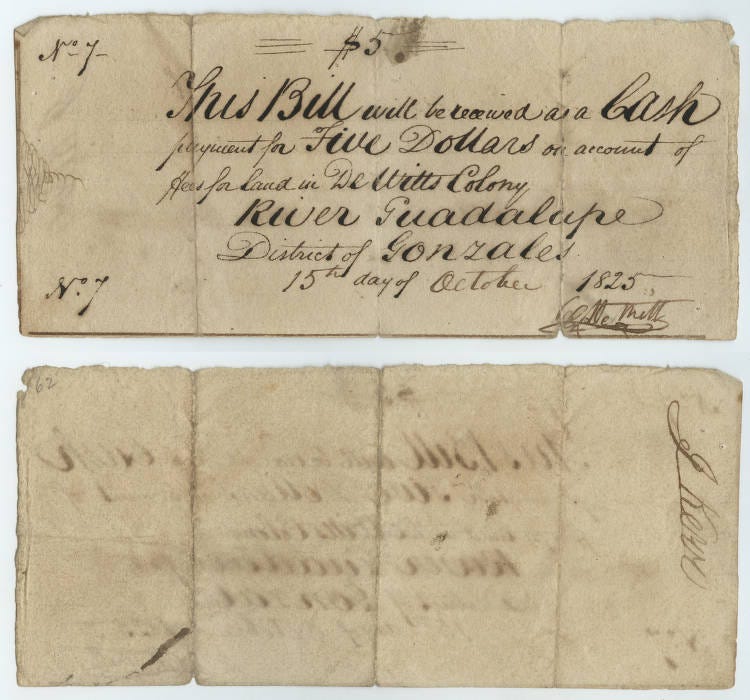
Still, DeWitt deserves recognition for his role in building Texas and for fostering, through his perseverance in the face of hardships, the rebel spirit that Texans continue to embody.
The colony was started and built. Gonzales came to hold extraordinary importance in History. This would not have happened without DeWitt taking the risk to try, investing all his money, making the effort to recruit Americans and defend the colony, and fighting for the settlers.
In April 1835, DeWitt traveled to Monclova, Mexico, to make his final attempt to secure another contract to bring more families. He did not obtain it. While in Mexico, he contracted a disease (several sources say it was probably cholera) that ended his life there. He died on May 18, 1835, at the age of 48, and was buried in an unmarked grave.
DeWitt did not participate in the Texas Revolution. He died just before the revolution started—before the cannon he had secured was shot at Lieutenant Francisco de Castañeda and his 100 Mexican dragoons who had come to retrieve it. He never knew that Gonzales County was to become one of the first 23 counties of the Republic of Texas.
But who knows what he could have done if he had had the opportunity to fight with his fellow Texians for a freer Texas?
The Loyal Turned Rebel Colony – Individual Rights, Freedom, Ingenuity
When American colonists began to arrive and settle in Mexican Texas in the Austin and DeWitt colonies, Mexico was under a federal constitution that respected their rights, with which the descendants of the American Revolution could agree and adhere (in fact, the green, white, and red flag with 1824 was used by Texans to show their support for the 1824 Constitution as they increasingly opposed Mexico’s actions). They also swore to respect and uphold that constitution.


When settlers in East Texas declared their independence in December 1826, an episode known as the Fredonian Rebellion, Austin and DeWitt sided with Mexico.
In 1832, a delegation representing the Anglo-American colonies convened in San Felipe. During this convention, the Texians restated their loyalty to Mexico; they also started listing grievances and asked for the repeal of the 1830 law that prohibited further entry of American immigrants and the separation of Texas and Coahuila. During the second convention, in 1833, they started drafting a state constitution. But Santa Anna, elected president in 1833, had no interest in granting local control to an Anglo-American colonized Texas.
In October 1835, the Constitution of 1824 was repealed, and the Mexican government became centralized. For a long time, the Texians remained loyal to Mexico because that was agreed under the empresario contracts and because they did not seek a fight. However, little by little, it became clear to them that, if the Constitution of 1824 wasn’t reinstated, they had no other choice but to seek their independence from Mexico.
About six months after DeWitt’s death, tensions between Santa Anna’s Mexico and Texians and Tejanos loyal to the Constitution of 1824 had greatly increased. In late September, the Mexican government sent a hundred dragoons to Gonzales to retrieve the cannon. Just 18 men—the Old 18—delayed the Mexican troops’ mission while the town was waiting for reinforcements.
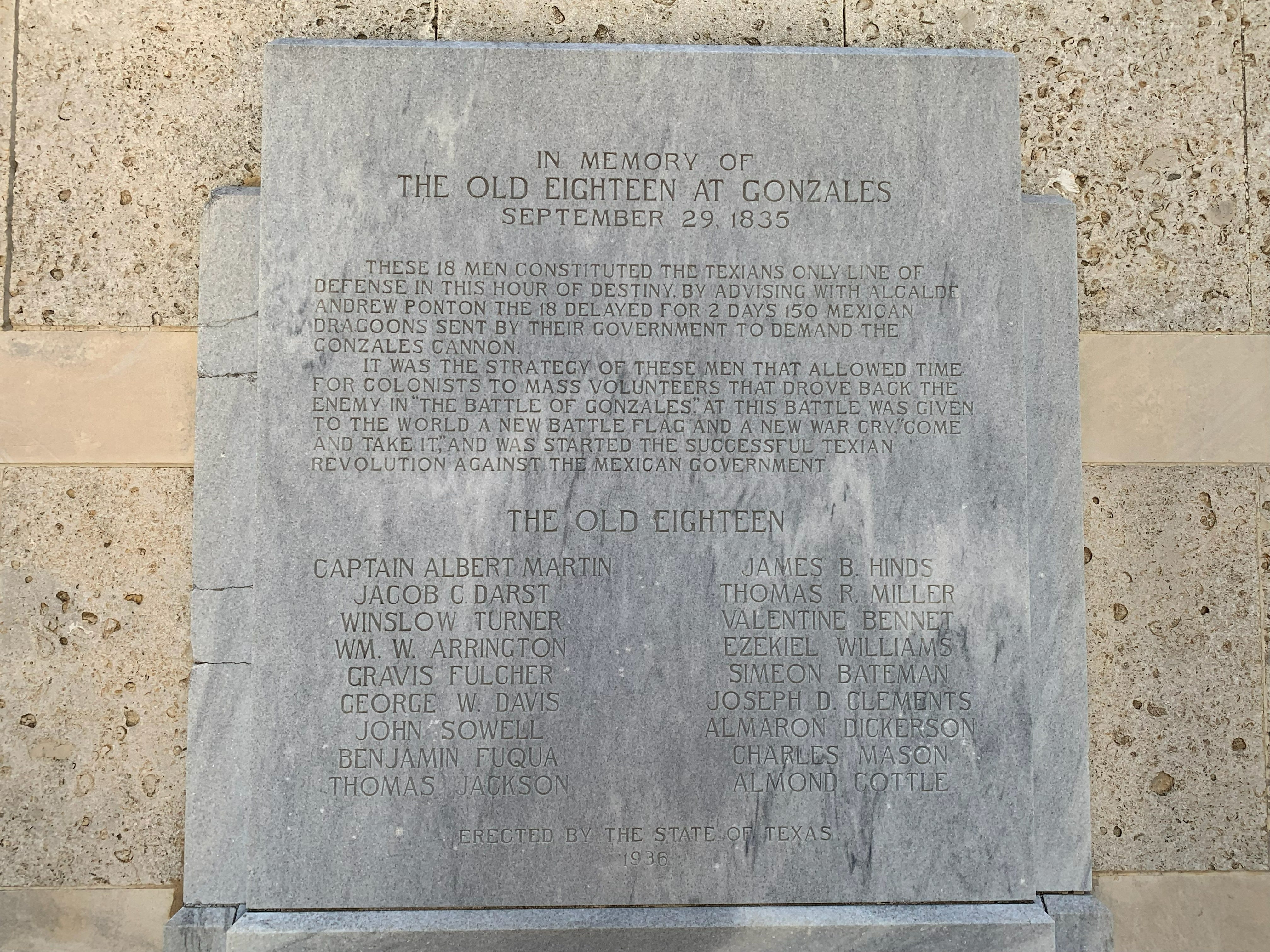
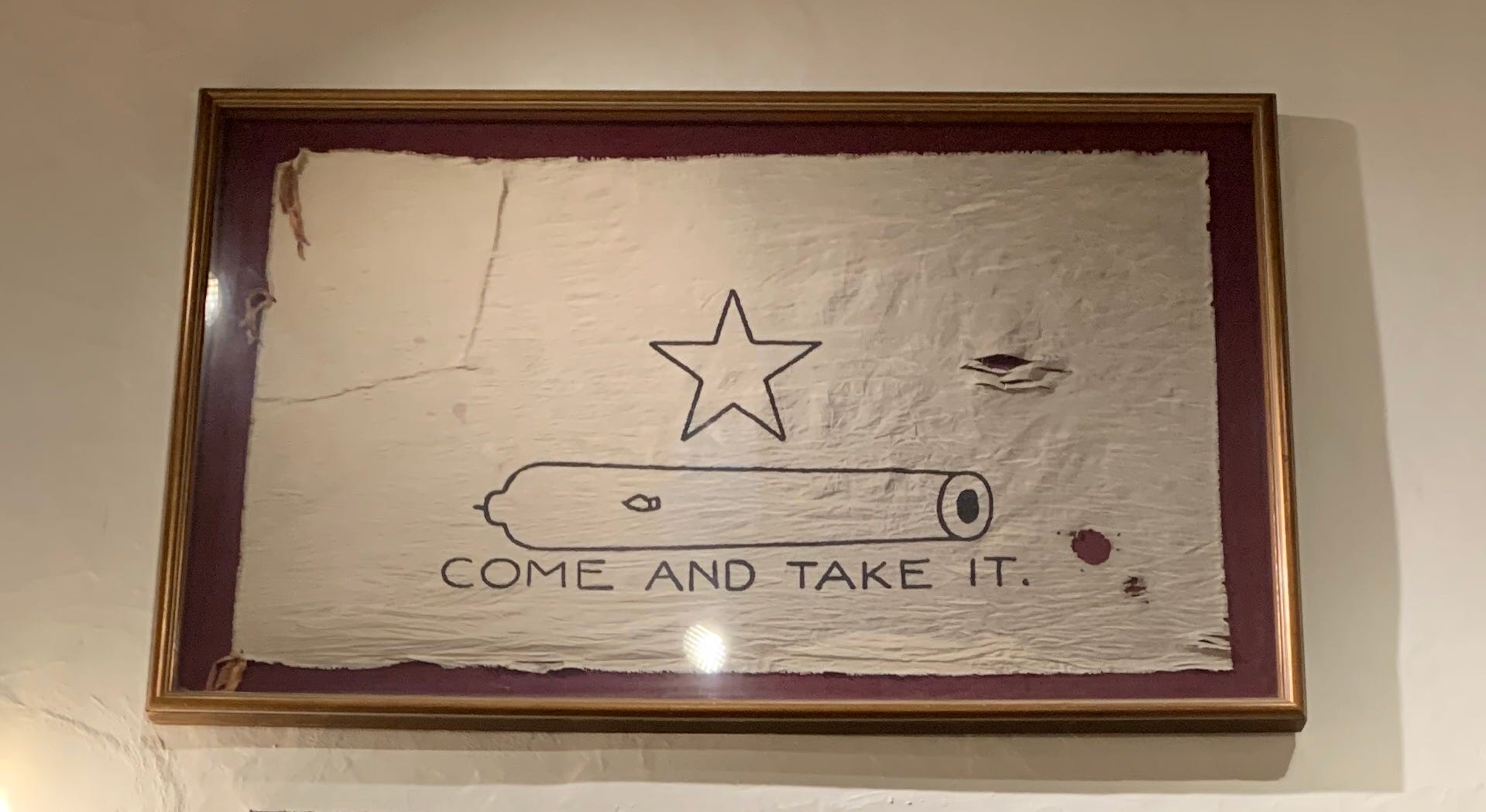
On October 2, 1835, “With rifles loaded, jugs in hand, and God on their side, the Texian militia sallied forth to meet the Mexicans,” Stephen Hardin depicted in his Texian Iliad. The Texians refused to return the cannon. If the Mexicans wanted it, they would have to “come and take it.” That day, Gonzales became the “Lexington of Texas.”
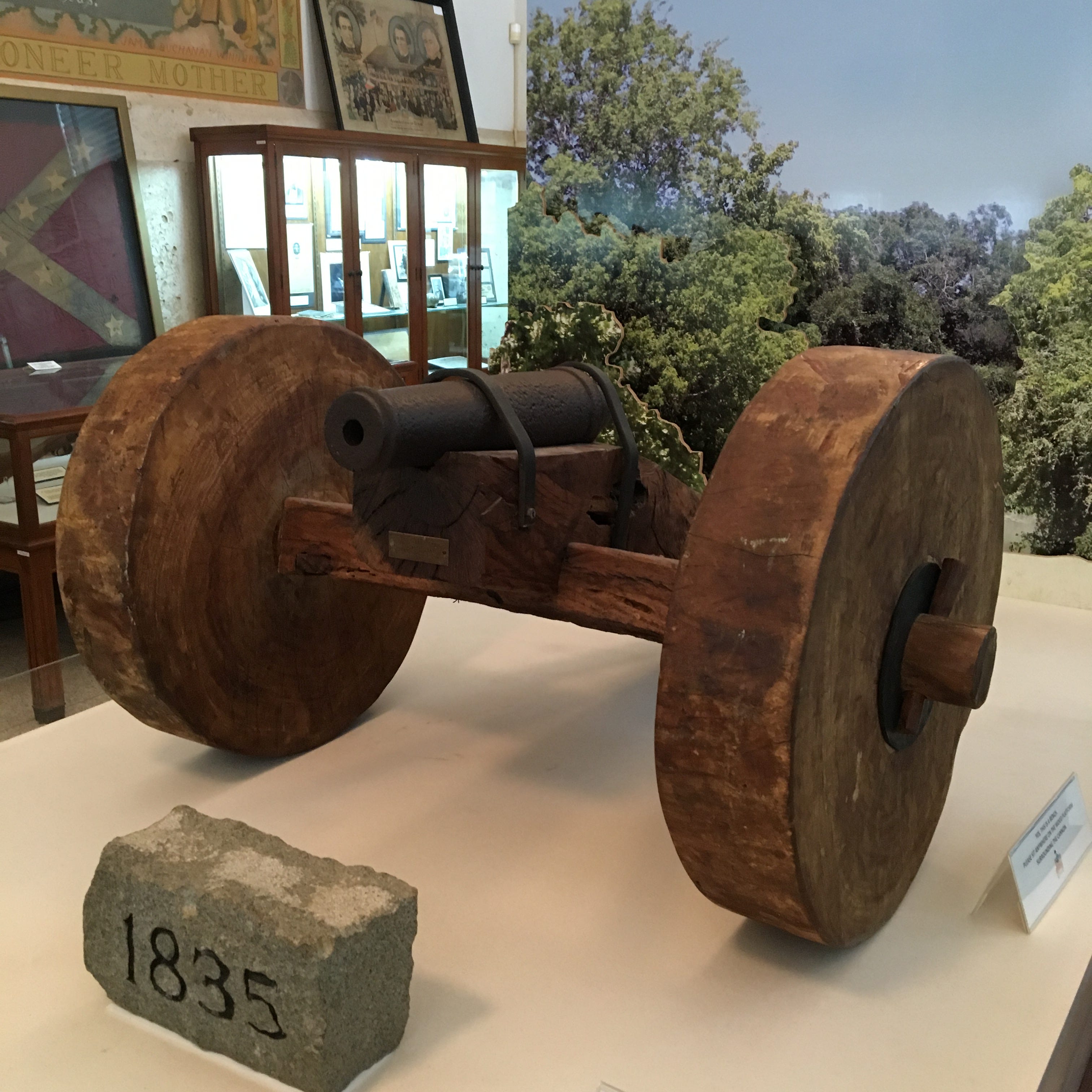
Some sources report that when DeWitt secured the cannon, he promised to return it at the request of the Mexican government. It’s very likely. However, the Mexican government from which he secured the cannon and the one that attempted to retrieve it were not the same, and the latter had a clear goal: to disarm Texians and crush any rebellion. We will never know what DeWitt would have done if he had been in Gonzales in late September 1835, but we know that he did what he could during his lifetime to ensure the safety of his settlers, including obtaining that very cannon.
We do know what DeWitt’s family did, too, at that time. Sarah Seely, DeWitt’s widow, and one of their daughters (whose identity varies depending on the source) used the wedding dress of one of the DeWitt daughters to make a flag that resonates to this day in every Texan’s heart: the Come and Take It Flag.
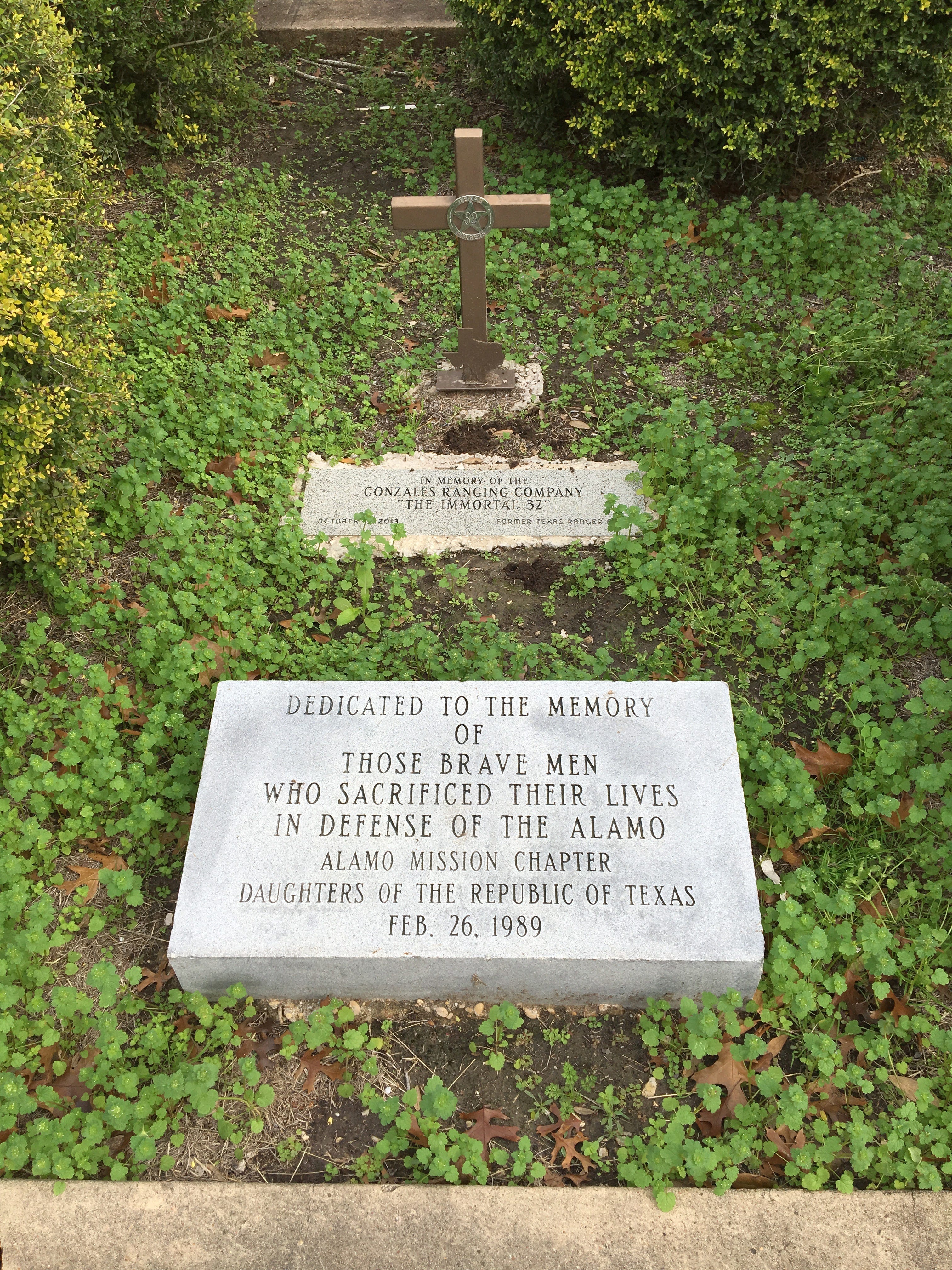
About six months later, as the Texas Revolution was in full swing, Gonzales was the only town to respond to William B. Travis’ call for help, “To the People of Texas and All Americans in the World.” Thirty-two men from Gonzales—the Immortal 32—among them husbands and fathers, left for San Antonio to join the fight at the Alamo, never to return to their families.
Conclusion
DeWitt didn’t live to see (and fight in) the Texas Revolution, but I would argue that he planted a seed that would eventually make the Texians and Tejanos fighting for their rights successful. In other words, he played a pretty major role in the Revolution, even if it was a quieter, more behind-the-scenes role.
Despite numerous setbacks, a somewhat hostile environment, little support from the Mexican government, and limited resources, he persisted, never giving up.
Who knows how the Texas Revolution would have started without Gonzales being founded and DeWitt obtaining the cannon they eventually refused to return?
I can imagine that his courage and sacrifice served as a model to many of the settlers in his colony who fought and (some) died to make Texas independent and free—among them the Old 18 and the Immortal 32.
DeWitt’s wife and daughter created the famous flag that Texans, to this day, cherish and display as a warning against tyranny of any kind and a symbol of the refusal to surrender their rights.
Green DeWitt's achievement is no small feat. He had to show entrepreneurship, grit and perseverance, courage, temperance, service, and sacrifice.
Sarah Seely DeWitt and several members of the DeWitt family now rest on land that she petitioned the Mexican government to grant her.
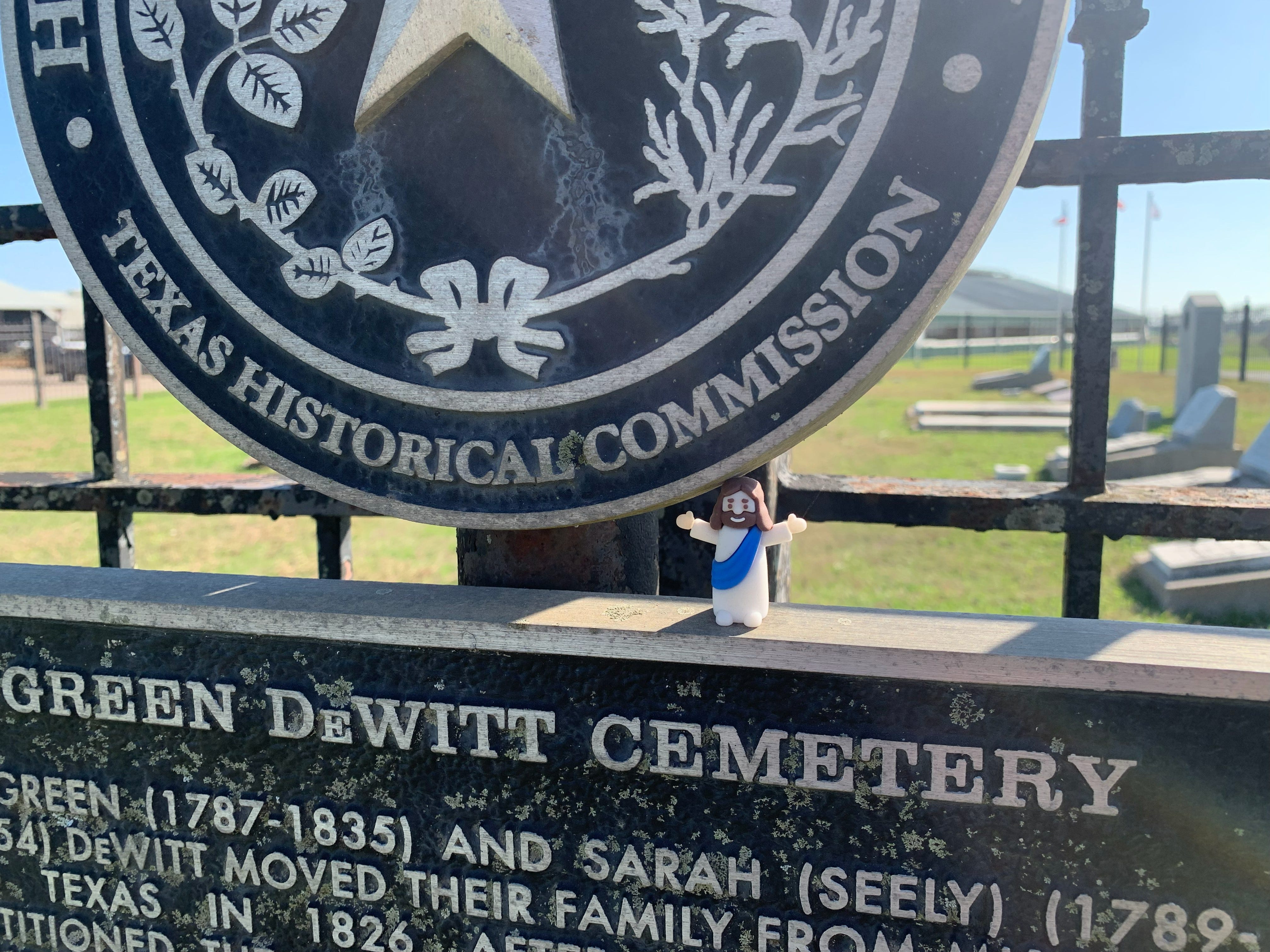
The Green DeWitt cemetery is on a small mound in J. B. Wells Park and is accessible. It also includes a memorial to Green, who was buried in Mexico. It was pretty moving to stop by and reflect on what we, Texans, owe the DeWitt family.


If you get a chance, visit this little cemetery. The least we can do is remember and honor the sacrifices, perseverance, and courage of the DeWitt family. And keep Texas free.
Sources
Bishop, C. (2016, May 4). The Law of April 6, 1830: Catalyst for the Texas Revolution. Texas State Historical Association. https://www.tshaonline.org/handbook/entries/law-of-april-6-1830
Briscoe Center for American History, University of Texas at Austin. (n.d.). Ethel Zivley Rather papers, 1905-[circa 1954]. Texas Archival Resource Online. https://txarchives.org/utcah/finding_aids/02341.xml
Bullock Museum. (n.d.). Sarah Seely DeWitt’s petition for a Mexican land grant. https://www.thestoryoftexas.com/discover/artifacts/sarah-seely-dewitts-petition-for-a-mexican-land-grant-spotlight-04-02-18
Cohn, L. K. (2024, April 10). Gonzales County Historical Commission to host DeWitt Colony bicentennial luncheon. Gonzales Inquirer. https://gonzalesinquirer.com/stories/gonzales-county-historical-commission-to-host-dewitt-colony-bicentennial-luncheon,96458
Flags of the Texas Revolution. (2023, December 2). Texas Historical Commission. https://thc.texas.gov/blog/flags-texas-revolution
Frenzel, V. E. (2008). Gonzales: Hope heartbreak heroes. Victoria Frenzel.
Green DeWitt $5 (five dollars) private scrip. (n.d.). SMU Libraries. https://digitalcollections.smu.edu/digital/collection/tbn/id/347/
Hardin, S. L. (1996). Texian Iliad: A military history of the Texas Revolution, 1835-1836. University of Texas Press.
Hardin, S. L. (2014, July 18). The Old Eighteen: Heroes of Gonzales. Texas State Historical Association. https://www.tshaonline.org/handbook/entries/old-eighteen
Henson, M. S. (2021, January 4). Anglo-American colonization in Mexican Texas (1821-1835). Texas State Historical Association. https://www.tshaonline.org/handbook/entries/anglo-american-colonization
Long, C. (2019, April 24). The Old Three Hundred: Pioneers of Texas colonization. Texas State Historical Association. https://www.tshaonline.org/handbook/entries/old-three-hundred
Lukes, A. E. (1970). The De Witt Colony of Texas, 1825-1836 [Doctoral dissertation, Loyola University Chicago]. eCommons. https://ecommons.luc.edu/luc_diss/1203/
McDonald, A. P. (2020, October 22). The Fredonian Rebellion: A struggle for independence in Texas. Texas State Historical Association. https://www.tshaonline.org/handbook/entries/fredonian-rebellion
Missouri Secretary of State. (n.d.). Timeline of historic Missouri: 1673-1820. https://www.sos.mo.gov/archives/history/timeline/1
National Archives. (n.d.). Articles of Confederation (1777). https://www.archives.gov/milestone-documents/articles-of-confederation
National Constitution Center. (n.d.). The constitutional convention. https://constitutioncenter.org/the-constitution/drafting-table/item/drafting-the-united-states-constitution
Rather, E. Z. (1905). DeWitt’s colony. The University of Texas at Austin. https://archive.org/details/dewittscolony00rath/page/n3/mode/2up
Roel, C. H. (2020, August 11). The history of DeWitt’s Colony in Texas. Texas State Historical Association. https://www.tshaonline.org/handbook/entries/dewitts-colony
Slayter, M. G. (2023, June 29). Sarah Seely DeWitt: Pioneer of Texas and creator of the ‘Come and Take It’ Flag. Texas State Historical Association. https://www.tshaonline.org/handbook/entries/dewitt-sarah-seely
Sons of DeWitt Colony Texas. (n.d.). The DeWitt Colony Alamo defenders. https://www.sonsofdewittcolony.org/gonreliefframe.htm
Sons of DeWitt Colony Texas. (n.d.). Green DeWitt: 1787-1835. https://www.sonsofdewittcolony.org/dewitt&kerr2.htm#dewitt
Tarlton Law Library, Jamail Center for Legal Research. (2023, August 15). Constitutions of Texas 1824-1876. University of Texas. https://tarlton.law.utexas.edu/constitutions/constitution-state-coahuila-texas-1827
Texas Historical Commission. (2021, October 2). The first shot of the Texas Revolution, fired from the west side of the Guadalupe River about four miles outside [Image attached] [Status update]. Facebook. https://www.facebook.com/TexasHistoricalCommission/posts/the-first-shot-of-the-texas-revolution-fired-from-the-west-side-of-the-guadalupe/4219557294823710/
Texas State Historical Association. (1995, November 1). History of Old Station: A key settlement in DeWitt’s colony. https://www.tshaonline.org/handbook/entries/old-station
The Travis Letter. (1836, February 24). The Alamo. https://www.thealamo.org/remember/battle-and-revolution/travis-letter
U.S. Census Bureau. (2022, June 1). Kentucky 230th anniversary of statehood (1792): June 1, 2022 [Press release]. https://web.archive.org/web/20241112210053/https:/www.census.gov/newsroom/stories/kentucky-admission-anniversary.html