

Chris Kyle: God, Country, Family
The Heroic Story of America's Deadliest Sniper

“To the distinguished character of Patriot, it should be our highest Glory to add the more distinguished Character of Christian.”
—George Washington, General Orders, 2 May 1778
It took no less than the AT&T Stadium in Dallas to accommodate all the people who wanted to say goodbye to Chris Kyle—7,000 of them. When his body was transported from Midlothian to Austin for interment at the Texas State Cemetery, “200 motorcycles, police cars, and military vehicles escorted Kyle’s body on its 200-mile journey” (Burling, 2015, p. 83).
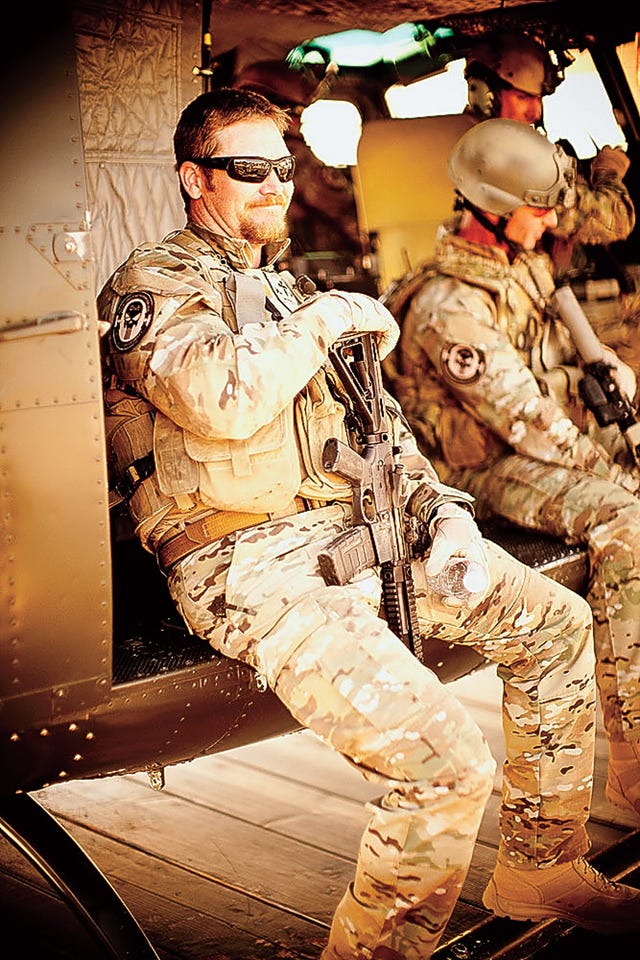
Kyle is best known as a Navy SEAL—“The Legend,” the sniper with the most kills in American military history. Throughout his years of battle while deployed, Kyle sustained multiple injuries. However, his family, Texas, and the U.S. lost him right here on American soil, shot by a fellow American veteran.
He was not just a Navy SEAL, though; he was a cowboy at heart, not only because he was from Texas but because he embodied core values—faith, patriotism, brotherhood, family, and justice—along with virtues—hard work, mental toughness, discipline, courage, perseverance, and humility—that define cowboys.
Chris Kyle was a loving father and husband, a patriot, a Christian first, and a Texan who gave so much to his country. He often wrestled with whether country or family came first—since protecting the nation also meant protecting his loved ones—but in the end, he was a devoted husband and father who loved family and country with equal passion.
From a young age until the day he died, he made helping others his life’s purpose. Chris Kyle’s story of achievement is one of Texan courage and American patriotism.
The Protector
Many spend years seeking their purpose in life—when they find it. Not so for Chris Kyle. From childhood to serving as a Navy SEAL, caring for his family, and supporting veterans, Kyle’s purpose was clear from the beginning: to help others.
“‘God anointed you with the name The Protector,’ his parents wrote. ‘Your life embodied the full meaning of that. You were tender to the young. Compassionate with the wounded. And sympathetic for the less fortunate. The Lord had his hand on you from the moment you were born. You were destined for greatness.’” (Friedman, 2015, para. 4)
Kyle was born Christopher Scott Kyle on April 8, 1974.
The name Christopher comes from Greek and means "Christ-bearer." The legend holds that after becoming a Christian, the man now known as Saint Christopher dedicated his life to helping others cross a river. Saint Christopher was a big, strong man who would carry travelers across the river on his shoulders. One day, as he carried a young child, the child grew progressively heavier as they crossed the river, to the point that it became difficult for the strong man to continue carrying the child. On the other side of the river, the legend says, the young boy revealed himself to be Jesus Christ, telling Christopher, “I am the Lord whom you serve. You have carried the weight of mankind upon your shoulders” (Hackett, 2018/2026, para. 3).
Defending His Country: Patriotism & Justice
As a child, Chris Kyle was told by his father never to start a fight. However, he understood that it was acceptable to fight as long as he was defending other children who were not as strong as he was and who were being picked on or bullied. He already felt a sense of responsibility to use his strength and courage to defend others.
“He felt a sense of purpose and fulfillment protecting the people around him.”
(Taya Kyle, quoted in Kyle & Doyle, 2013, p. x)
The young Chris Kyle had two dreams: to be a cowboy and to serve as a Marine defending his country and fellow Americans.
In 1996, he decided to enlist in the military. But when he visited the Marine Corps’ recruitment office, it was closed for lunch. He ended up talking with a Navy recruiter who told him everything about the SEALs.
As a young man, Kyle was also hungry for a challenge and the experience of battle. When he discovered what was required to become a SEAL, he was sold.
“When I heard how hard it was, how the instructors ran you and how less than 10 percent of the class would qualify to move on, I was impressed. Just to make it through the training, you had to be one tough [dude]. I like that kind of challenge.” (Kyle & DeFelice, 2013, p. 25)
He was initially rejected because of pins in his wrist from a rodeo injury. But as fate would have it, he was called back two years later to join the SEALs. He reported for training in 1999. In 2001, just before 9/11, he was assigned to SEAL Team 3 (Charlie Platoon). He was deployed 4 times: first to Kuwait in 2002, then to Nasiriyah, Iraq, in 2003 to support the U.S. Marines; the second to Fallujah in 2004; the third to Ramadi in 2006; and the last to Sadr City in 2008.
Marine or SEAL, his ultimate purpose was to defend his country, a fact that stayed crystal clear in his mind as he went into battle. In his book American Sniper, Kyle tells the story of “the only time [he] killed anyone other than a male combatant” (Kyle & DeFelice, 2013, p. 4). A woman was holding a Chinese grenade and was walking toward a group of Marines.
“It was my duty to shoot, and I don't regret it. The woman was already dead. I was just making sure she didn't take any marines with her. … My shots saved several Americans, whose lives were clearly worth more than that woman's twisted soul. I can stand before God with a clear conscience about doing my job. But I truly, deeply hated the evil that woman possessed. I hate it to this day.” (Kyle & DeFelice, 2013, pp. 4-5)
Kyle had a strong sense of justice and, as a Christian, drew a clear line between good and evil, the latter of which he did not tolerate. He put America first, which is the natural order for an American military service member: You enlist to protect your country, at the price of your life if necessary, not to protect those who want to kill your fellow citizens. Kyle was very outspoken about this. That didn’t mean, however, that he had no concern for civilian lives. As a sniper, he was saving lives—snipers tend to reduce civilian casualties in urban warfare (Mooney, 2015).
His nickname “The Legend” began as a way for his fellow SEALs to tease him about his growing reputation, based on his sniper kills: officially 160, but probably around 255. Official military-recognized kills require a witness who sees the enemy get shot and die. Those he wounded, who likely hid and later died from their wounds, are not counted as official.
But for Kyle, that number mattered less than the number of Americans he could save.
Brotherhood, Family, & Loyalty
Brotherhood is a fundamental value for the SEALs: “Being a SEAL requires that you never leave a fellow brother behind and you carry the weight of others” (McEwen, 2021, p. 112).
Kyle felt terrible when he had to return home, leaving his brothers-in-arms to fight without him.
Putting God first was never an issue for the Kyles, but whether country or family came first differed depending on who you asked, Chris or his wife Taya. He was deeply loyal to his team, and his duty, as he understood it, was first and foremost to fight for his country. That does not mean Chris Kyle did not love his family; quite the contrary. However, those two major values in his life were competing.
In 2004, when his first child was born, Kyle was called back to Iraq just 10 days after his son’s birth: “I felt bad about leaving Taya. She was still healing from the birth. But at the same time, I felt my duty as a SEAL was more important. I wanted to get back into action. I wanted to go to war” (Kyle & DeFelice, 2013, pp. 156-157). His second child, a girl, was born only two days before he was deployed to Ramadi in 2006.
His team’s significance is clear in how he talks about training his replacement: “I left knowing the guy who replaced me. If he dies, or he messes up and other people die, that’s on me. You really feel like you’re letting down those guys you’ve gone through hell with” (Mooney, 2013, para. 30).
His wife, Taya, described seeing him as she had never seen him when two of his men were wounded (Ryan Job became blind as a result, and Marc Lee died after being shot in the mouth).
If he could not protect and save those he cared about—his family, his fellow SEALs, his fellow Americans—Kyle seemed to feel he was letting them down.
He described seeing the pain his wife experienced while giving birth to their first child as “the most hopeless feeling in the world, seeing my wife in excruciating pain, without anything I could do. I was a hell of a lot more nervous watching her give birth than I ever was in combat” (Kyle & DeFelice, 2013, p. 153).
When Taya had a C-section for the birth of their daughter, and they possibly hit an artery, he appeared panic-stricken: “I was deathly afraid for my wife. I felt real fear.” He added: “Maybe it was a touch of what she’d gone through every moment of my deployment. It was a terrible hopelessness and despair. A hard thing to admit, let alone to stomach” (Kyle & DeFelice, 2013, p. 295).
Kyle was also a loving father. Taya described how their kids’ “favorite thing was to run at full speed and jump on Chris while he was on the couch; even exhausted, he never tired of playing with them” (Kyle & DeFelice, 2013, p. 554). She shared the story of how, when their daughter was born, he “was the first person to hold her. The word beaming was invented to describe the proud expression on his face” (Kyle & DeFelice, 2015, p. 69).
His son Colton later described his father as “very passionate about being a father, and a husband, and a family man” (Brockenbush et al., 2024).
When his daughter was diagnosed with leukemia (thankfully, it turned out to be a false alarm), he decided to go home, despite the guilt he felt about abandoning his team: “It was a conflict—family and country, family and brothers in arms—that I never really resolved. I still felt like a quitter, a guy who didn’t do enough” (Kyle & DeFelice, 2013, p. 402). At the same time, his inability to do anything to save her was nerve-racking:
“My little girl was going to die.
A cloud of helplessness descended over me. I was thousands of miles away from her, and there was nothing I could do to help. Even if I’d been home, I couldn’t cure her.” (Kyle & DeFelice, 2013, pp. 400-401)
Born a protector, exceptionally courageous and mentally tough, Chris Kyle felt utterly helpless when he was unable to be there for, protect, and save those he loved.
“Chris said later that watching me give birth was probably the most powerless feeling he’d ever had. He knew I was in pain and yet couldn't do a whit about it. ‘It's like watching your wife get stabbed and not being able to do anything to help.’” (Kyle & DeFelice, 2015, p. 46)
After his fourth tour in Iraq, he pondered whether to reenlist. Taya wanted their children to have their father at home. He had been wounded and suffered from high blood pressure. According to journalist Michael Mooney, “he survived six IED [improvised explosive device] attacks, three gunshot wounds, two helicopter crashes, and more surgeries than he could remember” (Mooney, 2013, para. 3). Like in many SEAL marriages, there were tensions between Taya and Chris. He chose family over country.
“[T]he joy you get from your family will be twice as great as the pleasure you had in the military.” (Chris Kyle, quoted in Kyle & DeFelice, 2015, p. 97)
Later, his wife recounted that, when discussing with military members considering leaving the military, “he wouldn’t push them one way or the other” but he would tell them that if they decided to do so, “there’[d] be hard times” but “the joy you get from your family will be twice as great as the pleasure you had in the military” (Kyle & DeFelice, 2015, p. 97).
Humility in Everything He Did
It was only after his first deployment, upon returning home, that Kyle attended sniper school. He became so skilled at his craft that Iraqi insurgents put a bounty on his head (varying by source between $20,000 and $80,000):
“In Ramadi, the insurgents came to know and fear Chris Kyle. They called him al-Shaitan Ramadi—the Devil of Ramadi. There was a reward out for Kyle and his fellow snipers. Al-Qaeda in Iraq (AQI) would pay twenty thousand dollars to any insurgent who could kill a sniper and bring in his weapon.” (Couch & Doyle, 2014, p. 230)
In Sadr City, he made his longest kill at 2,100 yards (1,920 m), though the exact distance varies slightly depending on the source.
Despite his craftsmanship and success, he remained incredibly humble.
He often downplayed his kill count. According to him, he was never the best sniper, even at the sniper school; he simply had had more opportunities to be in battle than better snipers.
Those he saved, whose number was never enough, were more important to him than the number of enemies he killed.
When he was first approached to write a book, he refused, not wanting to talk about himself. With a little persuasion, and given that someone would eventually write one about him, so he might as well tell his story himself, he agreed, but only because he wanted to talk about his brothers-in-arms and to help the families of those who had died.
All proceeds from the book were donated to the families of service members who died and to organizations that help veterans. During his book signings, he acted like the “regular guy” he said he was and would not sit while his readers waited in line: “If y’all are standing, I can stand” (Mooney, 2013, paras. 31, 99).
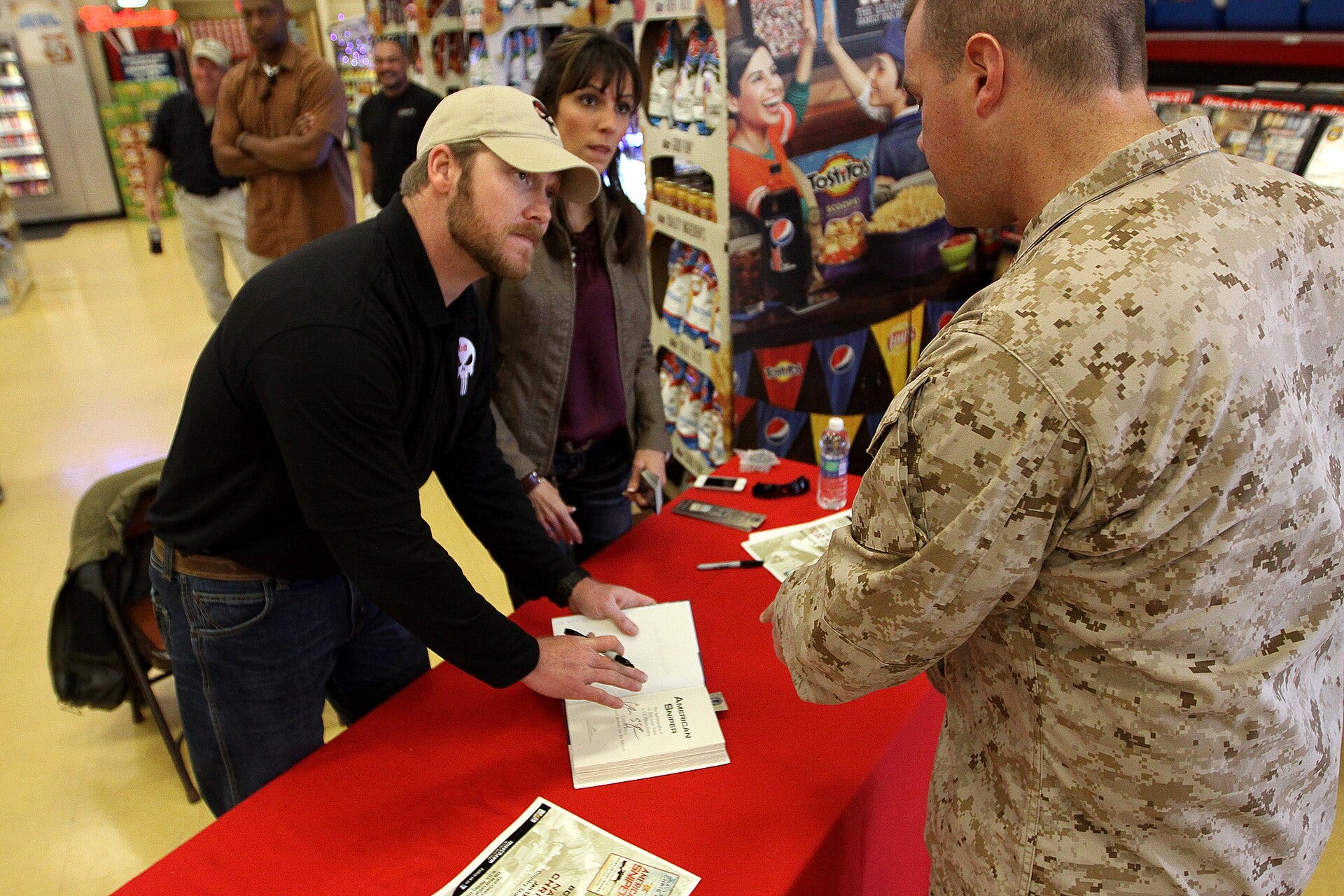
He also humbly responded to fellow soldiers who recognized him in the United States and thanked him. He would never take credit alone: “I just did a job. I was in some badass situations, but it wasn’t just me. My teammates made it possible” (Mooney, 2013, para. 28).
In Code Name: Johnny Walker, the author, an Iraqi interpreter who helped the SEALs, including Kyle’s Team 3, described working with Kyle:
“I worked with him for only a short while when he was deployed with Team 3 in Baghdad. I liked him immediately and we became great friends. He was very humble and respectful, easygoing and friendly. We came from very different backgrounds and religions, but there was never any friction because of it. He did his best to teach me a few things about bolt rifles, long-range shooting, and hunting as we passed the time between mission.” (Walker & DeFelice, 2014, p. 224)
When he was learning ranching, he already considered himself a cowboy, having worked on a ranch and ridden horses from a young age. Nevertheless, in his autobiography, he explained how that experience brought him back to reality: “[I] quickly found out I wasn’t nearly as much of a cowboy as I thought I was” (Kyle & DeFelice, 2013, p. 20).
Brotherhood of Veterans
After retiring from the military, he made it his purpose to help veterans—always a protector. As a veteran who had endured the horrors and pressures of war, he could empathize with them. As he saw it, most didn’t ask to be treated differently.
“I’d like us to remember the suffering of those Americans who were injured serving this country before we dole out millions to slackers and moochers. Look at the homeless: a lot are vets. I think we owe them more than just our gratitude. They were willing to sign a blank check for America, with the cost right up to their life. If they were willing to do that, why shouldn’t we be taking care of them?
I’m not suggesting we give vets handouts; what people need are hand-ups—a little opportunity and strategic help.” (Kyle & DeFelice, 2013, p. 494)
He helped pay for and install gym equipment at their homes because some were treated differently at public gyms due to missing limbs. He took some to the shooting range for some fun time “with the boys.” He treated them as brothers-in-arms, continuing to care for them, just in a different context.
“He … had a warm heart and a genuine reputation for helping people, especially veterans and others in need in our community.” (Taya Kyle, Kyle & DeFelice, 2015, p. xii)
On the tragic day of February 2, 2013, he was doing just that—helping a fellow veteran. The man who killed Kyle and his friend struggled with mental health problems. His mother, worried about him, had contacted Kyle seeking assistance, and Kyle willingly agreed to help.
Kyle may not have died in combat, but he died fulfilling his personal duty to help and protect those in need.
The Patriot
America First: Loyalty & Love of Country
It is refreshing to read how much Chris Kyle loved his country, the United States. Not because it is a part of the past that cannot be found today, but because we dare to talk about it less these days. For many, it has become more important to talk about any failure of the great country that allows them to criticize it without retribution, as in other countries, than to show gratitude for a country that has accomplished so much and done so much good for the entire world. Kyle did not tolerate that hypocritical bien pensance.
As a SEAL, he was never confused about his mission: protecting American lives, whether those of his team members and brothers-in-arms from other branches of the military or of the American people. Their lives always came before those of their enemies.
“I didn't risk my life to bring democracy to Iraq. I risked my life for my buddies, to protect my friends and fellow countrymen. I went to war for my country, not Iraq. My country sent me out there so that bullshit wouldn't make its way back to our shores.” (Kyle & DeFelice, 2013, p. 258)
He didn’t sugarcoat the evil he witnessed in Iraq—that we witnessed on 9/11—nor did he shy away from the need to combat it to protect the good. Kyle and his team fought evil abroad so we didn’t have to fight it at home; they saw it up close and endured what, thanks to them, we won’t have to face at home.
This is why, for these men and women, returning home to fellow citizens who do not know their military is at war abroad, do not care, or, worse still, take their disagreement with a war waged by their government to the military rather than to those in charge in their government, can be particularly unnerving. Kyle was utterly disappointed that Americans cared little about what was going on in Iraq.
“If you hate the war, that’s fine. But you should still support the troops. They don’t get to pick where they’re deployed. They just gave the American people a blank check for anything up to and including the value of their lives and the least everyone else can do is be thankful. Buy them dinner. Mow their yard. Bake them cookies.” (Mooney, 2015, p. 19)
It was obviously difficult for him to see Americans disagreeing with a war waged by their government, taking it out on American soldiers who risked their lives and sometimes died so they could have that very freedom to disagree openly with their government: “If you want to go protest, it’s been paid for you to go do that” (quoted in Mooney, 2015, p. 95).
Kyle cautioned: “The public is soft. They have no idea” (Mooney, 2015, p. 46).
“Hard times create strong men.
Strong men create good times.
Good times create weak men.
And weak men create hard times.”
—G. Michael Hopf
America First: Honor & Integrity
Moreover, Kyle wasn’t just a patriot in relation to the military; he had a profound respect for his country, which meant Americans needed to respect its symbols: the national anthem and the flag.
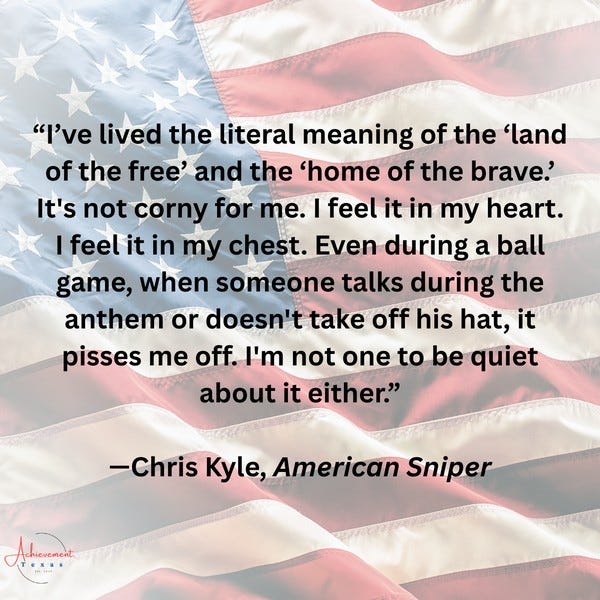
When it came time to choose an actor to play his role in the movie version of his book American Sniper, there was no way someone who didn’t love the United States would play it. Kyle’s integrity in loving his country was evident in everything he did.
“If there was a movie, he wanted the actor who portrayed him to be a true American. He couldn't stand actors who would make unpatriotic statements against the war and then turn around and do war films. He told Jim he didn't want a hypocrite playing him.” (Kyle & DeFelice, 2015, p. 136)
As a true patriot, Kyle also loved American history. Most people who have heard of Chris Kyle know his book and its movie adaptation, American Sniper. As you can guess, Kyle loved guns. He managed to combine all of these into a book that is not as well-known as American Sniper. American Gun recounts the history of the United States through 10 guns. From the publisher:
“Chris Kyle dramatically chronicles the story of America—from the Revolution to the present—through the lens of ten iconic guns and the remarkable heroes who used them to shape history: the American long rifle, Spencer repeater, Colt .45 revolver, Winchester 1873 rifle, Springfield M1903 rifle, M1911 pistol, Thompson submachine gun, M1 Garand, .38 Special police revolver, and the M16 rifle platform Kyle himself used. American Gun is a sweeping epic of bravery, adventure, invention, and sacrifice.”
This is an awesome feat that American history lovers and gun enthusiasts will greatly enjoy. As I said, consistency.
American Soldier: Valor
Most of all, Kyle showed valor. Valor is necessary to become a SEAL, and 90% of recruits give up during training. He showed it during BUD/S when he refused to have a cast placed on his fractured foot so he could finish training.
BUD/S, which stands for Basic Underwater Demolition/SEAL, is one of the toughest military training programs. It lasts 6 months, during which recruits undergo physical conditioning, diving, and land warfare training. The most difficult part is Hell Week: nearly 6 days of uninterrupted exercises designed to test whether you are not only physically but also mentally fit to become a SEAL.
“Getting through BUD/S and being a SEAL [was] more about mental toughness than anything else. Being stubborn and refusing to give in [was] the key to success.” (Kyle & DeFelice, 2013, p. 38)
Many books have been written about Hell Week, which I encourage anyone going through tough times to read—it will humble you and your circumstances.
Kyle also showed valor by balancing the defense of his country with that of his family. Both Kyle’s book and his wife’s, American Wife, discuss his struggle to decide whether country or family came first. (God always, and for both of them, came first.) Taya placed family before country, but Kyle consistently placed country before family—until he retired.
On Memorial Day, Veterans Day, and every day, we must keep in mind how much of a sacrifice it can be for military members and their families to fight for your country, a sacrifice that (at the time Kyle’s book was written) led to a 90% divorce rate among SEAL couples.
A Proud Texan
A Texan Family: Christian & Hard Working
You can take a Texan out of Texas, but you cannot take Texas out of a Texan. Kyle was a proud Texan. It began in his childhood, in how he was raised and what he dreamed of becoming.
Christopher Scott Kyle was born on April 8, 1974, in Odessa, Texas. His brother, Jeff, was born 4 years later. Their mother, Deby, was a Sunday school teacher and worked at a juvenile detention center, while their father, Wayne, was a manager at Southwestern Bell/AT&T and a volunteer deacon at their local church.
Kyle had a strong father figure, who is described as his best friend while still requiring of him the discipline a father should demand.
His parents also taught him the importance of hard work early on:
“Both parents kept busy and worked hard: His father always maintained two jobs, and his mother went back to work as soon as the boys left the house.” (Mooney, 2015, p.27)
Kyle explained that growing up in Central Texas towns,
“I learned the importance of family and traditional values, like patriotism, self-reliance, and watching out for your family and neighbors. I'm proud to say that I still try to live my life according to these values. I have a strong sense of justice. It's pretty much black-and-white. I don't see too much gray. I think it's important to protect others.” (Kyle & DeFelice, 2013, p. 9)
Texan to the Core: Texas Pride, Texas Land, & Cowboys
In Iraq and among his team, he was known as TEX before he became The Legend. Like all good Texans, he was proud to be from the Lone Star State but didn’t take himself too seriously. He wasn’t going to keep it a secret, though: Not only was he wearing a Longhorns baseball cap instead of his military headgear, “he told people he wore the hat so the enemy knew Texas was represented, that ‘Texans shoot straight’” (Mooney, 2015, p. 56).
Kyle really wanted Texas to be represented in Iraq. Indeed, on its DPV (Desert Patrol Vehicle), “the Texas flag [was] flying off the rear. Both my chief and I were Texans, which made that a mandatory accessory.” (Kyle & DeFelice, 2013, p. 94)
One of his SEAL Team’s interpreters, whom he encouraged to write a book and who called him a friend, teased him about his Texas accent: “His Texas accent was hard to understand… ‘Speak English!’ I told him constantly. He’d just laugh and make his Texas drawl even deeper.” (Walker & DeFelice, 2014, p. 224)
As a SEAL, he was initially stationed in California and traveled a lot. As a result, his children weren’t born in Texas. So he asked his parents to send Texas dirt so that it would be the first thing his kiddos’ feet would touch—Texas soil. It doesn’t get much more Texan than that.
“The first thing [the Kyles’ first child] feet touched when we took him home from the hospital was Texas soil, which his folks had brought West at our request. No child of Chris Kyle’s was going to be anything but a Texan. He smiled contentedly before nodding off back to sleep; clearly Texas was in his genes.” (Kyle & DeFelice, 2015, p. 49)
Among his passions was Texas land. He wanted to be a cowboy, after all. He started by working on ranches with his brother after school. He raised steers and heifers for Future Farmers of America. At 16, rodeo entered his life, and he learned to ride bulls and later saddle broncs. He won first-place belt buckles. Furthermore, while in college, he learned ranching and worked part-time on a ranch.
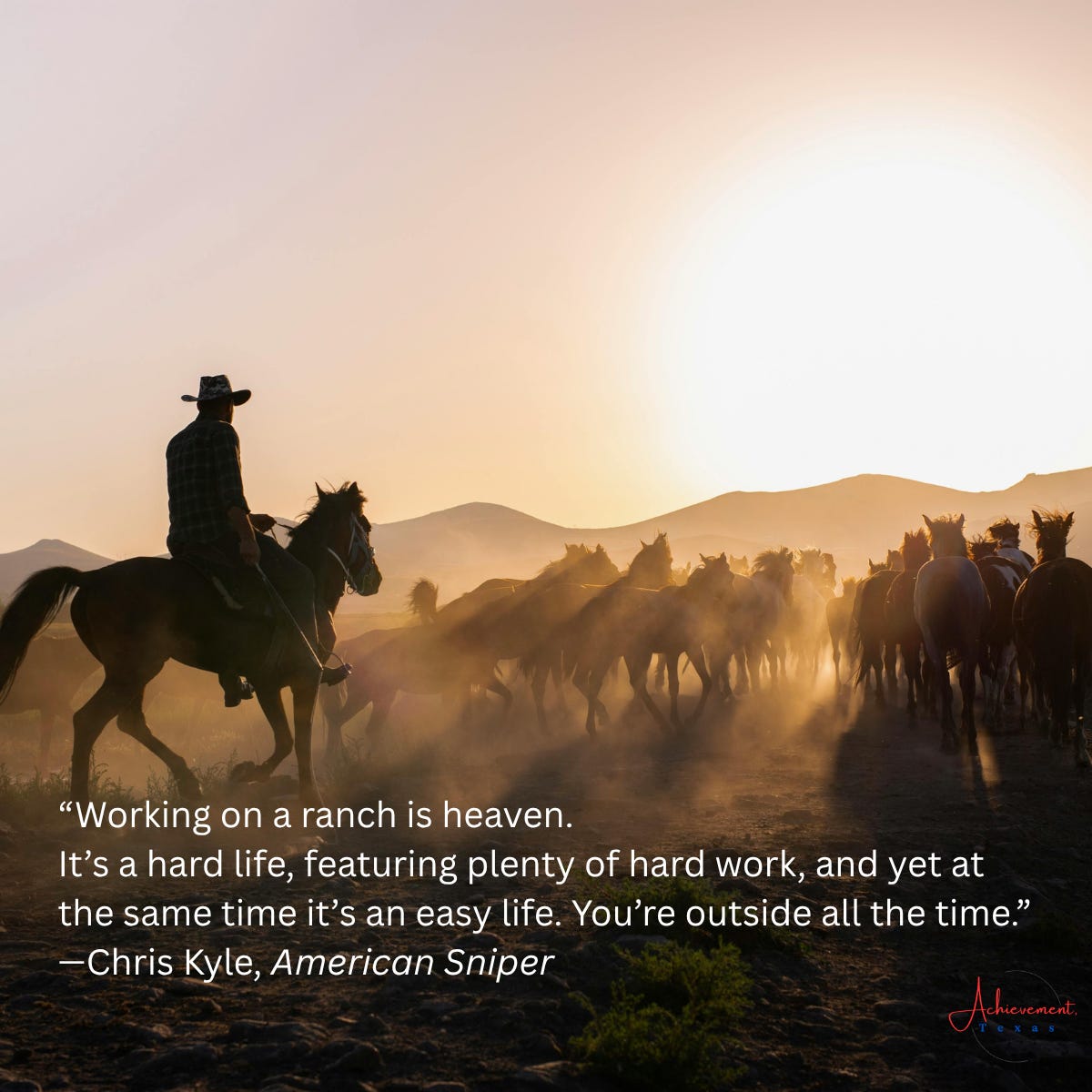
When he was initially refused entry to the military because of pins in his wrist from a rodeo injury, he chose to become a ranch manager.
Kyle exemplified many of the values and virtues that define Texans. He valued God, country, and family above all else. He also valued justice. He was a hard worker, persistent, and he demonstrated a healthy dose of both kindness and badassery (if you will allow me the term). His courage and discipline carried him through the most difficult experiences in his life.
Christian First
Most of all—and before anything else—he was a Christian. This is both an American and a Texan trait, but Kyle’s Christian upbringing took place in Texas.
His parents were very religious and attended church on Sunday morning, Sunday night, and Wednesday evening. He and Taya pointed out that faith was not only accepted in Texas but also welcomed.
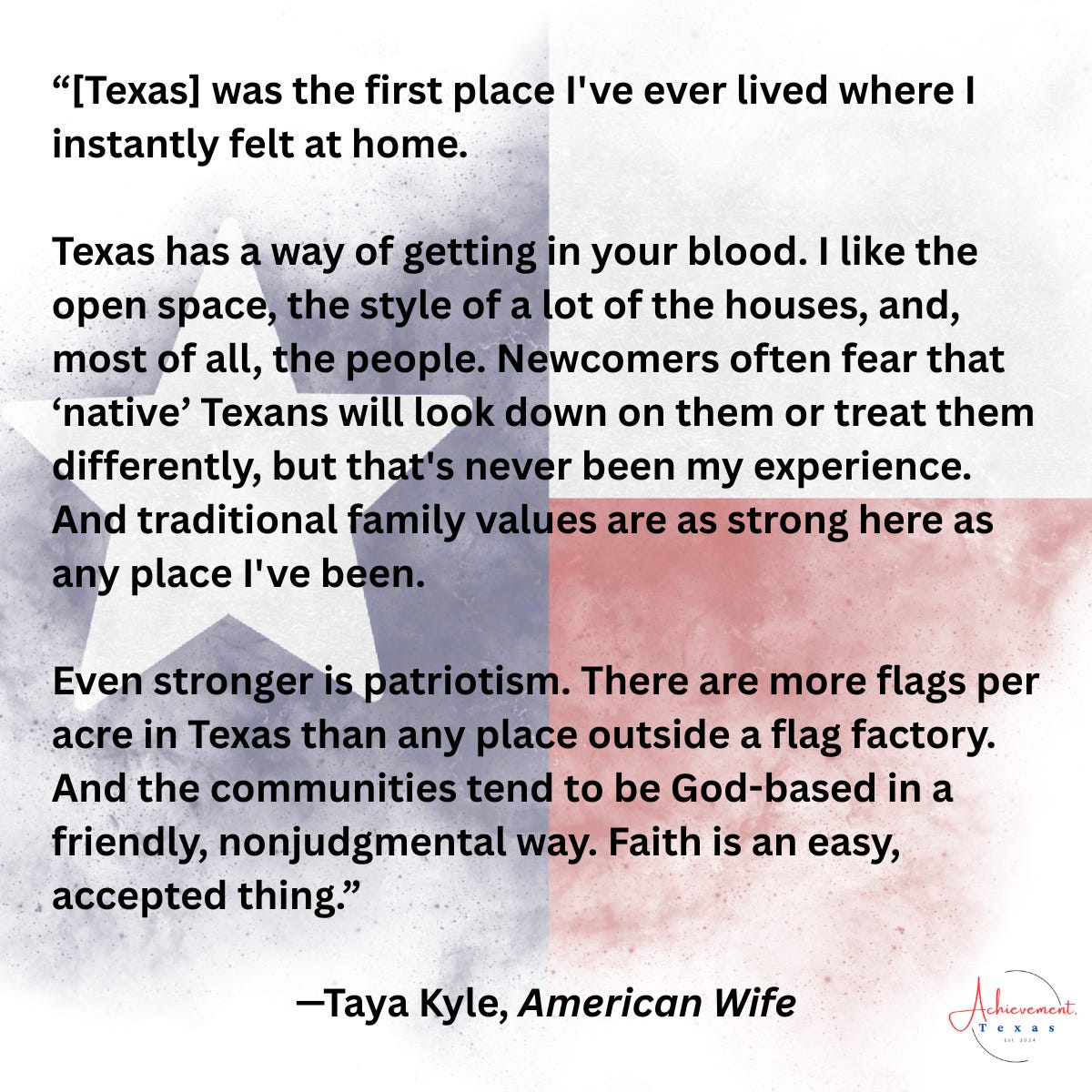
Kyle carried a Bible with him, seemingly everywhere. He had one in his truck, and Taya said she was impressed by how much he knew and how he could quote entire passages of the Bible. Kyle, as always, was more humble about it. A couple of times, he said he and Taya weren’t the very religious type, but he would pray to thank God every time he came back from battle.
“Before every OP, a bunch of the platoon would gather and say a prayer. Marc Lee would lead it, usually speaking from the heart rather than reciting a memorized prayer.
I didn’t pray every time going out but I did thank God every night when I got back.” (Kyle & DeFelice, 2013, p. 357)
Another virtue Kyle had was gratitude, which he never failed to express—for God, his country, his family, and every experience he went through.
Remembering Chris Kyle
In his book American Gun, Kyle wrote,
“I would love for people to be able to think of me as a guy who stood up for what he believed in and helped make a difference for veterans. You know, somebody who cared so much about them that he wanted them taken care of.” (Kyle & Doyle, 2013, p. ix)
Throughout his life, Kyle showed up for others—his family, his SEAL team, other military service members, and fellow veterans. And America showed up for him when he left this Earth.
“There was a procession nearly two hundred miles long—the Department of Public Safety says it was almost certainly the longest in American history. People lined the road in every town, waving flags and saluting. American flags were draped over every single bridge on I-35 between the Kyle home in Midlothian and the state capital.” (Mooney, 2015, p. 113)
The Texas Legislature remembered and honored Kyle in 2013:
“‘Too often, service members and their spouses must wait too long for licensing in fields in which they already have substantial experience,’ [former state Senator and co-author of the bill Leticia] Van de Putte said. ‘This law will put them on the fast-track for an occupational license, but also will require them to come into full compliance with Texas’ licensing requirements within a year.’
Additionally, SB 162 is also known as the ‘Chris Kyle Bill,’ named after the former Navy SEAL and author who was slain earlier this year, and recognizes the achievements of service members with special operations training. Kyle’s wife, Taya, was on-hand at the signing ceremony.
‘I appreciate the sacrifices these many brave special operators have made,’ [former state Representative and co-author of the bill Dan] Flynn said, ‘and I hope that by incorporating these changes into current Texas law we can honor the legacy of Chris Kyle and the many like him.’” (Fountain, 2013, paras. 7-9)
In 2015, Texas Governor Greg Abbott signed a proclamation making February 2nd “Chris Kyle Day”:
“By proclaiming today, February 2, 2015, as Chris Kyle Day, I recognize — as Chief Petty Officer Kyle would insist — that he is the face of a larger force for freedom that has made this country the bravest, strongest and freest in the history of the world. Kyle is one of the legions of valiant warriors who made the ultimate commitment to our country: they put their lives on the line for a cause greater than themselves. They faced risks few Americans can comprehend, but all Americans should honor. So many Texans like Kyle have served with unmatched honor, bravery and heroism, and a grateful country is better because of them.” (Abbott, 2015, para. 4)
The Texas Legislature and Governor Abbott also posthumously awarded the Texas Legislative Medal of Honor to Kyle in 2015.
Chris Kyle became a SEAL despite obstacles, including an initial rejection due to a prior injury. He moved on, worked hard to become a ranch manager, and was then unexpectedly called back to serve. He served with courage and valor—his country, his brothers-in-arms, his family, fellow veterans, and all of us Americans who benefit from the risks he took and the sacrifices he and his family made so that we could have a good and free life.
As an American by choice who has witnessed too many Americans by birth disrespect their country, the military, and the role our Founding Fathers and those who came before us played in making the world undeniably better, researching Kyle’s life was a striking reminder that the battles he fought in war zones to defend the founding principles of the United States need to be fought in everyday life by remembering and exemplifying those principles and the people who defended them over the past 250 years.
Thank you, Chris Kyle, for caring so much about this great country.


Sources
Brockenbush, A., Luttrell, M. J., Luttrell, Morgan, & Luttrell, Marcus. (Hosts). (2018, September 19). Taya Kyle – Wife of ‘American Sniper’ Chris Kyle – Fighting back from tragic loss – Lessons on grief, faith, & love [Audio podcast episode]. In Team Never Quit. Link here.
Brockenbush, A., Luttrell, M. J., Luttrell, Morgan, & Luttrell, Marcus. (Hosts). (2021, February 10). Taya Kyle: NY Times Best Selling Author, Widow of Chris Kyle, Executive Director of Chris Kyle Frog Foundation [Audio podcast episode]. In Team Never Quit. https://teamneverquit.com/podcast/taya-kyle-2/
Brockenbush, A., Luttrell, M. J., Luttrell, Morgan, & Luttrell, Marcus. (Hosts). (2024, July 31). Colton Kyle: Son of Chris & Taya Kyle, Operator of “American Sniper Brand” On Carrying The Torch, Honoring Heroes Through Faith [Audio podcast episode]. In Team Never Quit. Link here.
Burling, A. (2015). Chris Kyle. Abdo Group. https://www.amazon.com/Chris-Kyle-American-Sniper-Essential/dp/162403893X
Couch, D., & Doyle, W. (2014). Navy SEALs: Their untold story. William Morrow. https://www.amazon.com/Navy-SEALs-Their-Untold-Story/dp/0062336606/
Fountain, P. (2013, August 28). Perry signs ‘Chris Kyle Bill,’ allows military experience for Texas state licenses. Texas Military Department. https://tmd.texas.gov/perry-signs-chris-kyle-bill-allows-military-experience-for-texas-state-licenses
Friedman, E. (2015, February 7). Interview with Navy SEAL sniper Chris Kyle. Sports Illustrated. https://www.shootingillustrated.com/content/interview-with-navy-seal-sniper-chris-kyle/
Friedman, E. (2015, February 12). Memorial service held for Navy SEAL Chris Kyle, NRA Shooting Illustrated. https://www.shootingillustrated.com/content/memorial-service-held-for-navy-seal-chris-kyle/
Grokipedia. (n.d.). Pien pensant. https://grokipedia.com/page/bien_pensant
Hackett, J. (2018/2026). Currently fascinated by...Christopher. NameStories.com. https://namestories.com/blogs/news/currently-fascinated-by-christopher
Hopf, G. M. (n.d.). Hard times. G. Michael Hopf. https://www.gmichaelhopf.com/hard-times
Hookstead, D. (Host). (2022, November 16). Former Navy SEAL sniper Kevin Lacz talks Chris Kyle and facing carnage in Iraq [Audio podcast episode]. In Outkick’s American Joyride with David Hookstead. Link here.
KXAN. (2013, February 12). Chris Kyle’s emotional journey to Austin [Video]. YouTube. Link here.
Kyle, C., & DeFelice, J. (2013). American sniper: The autobiography of the most lethal sniper in US military history―A Navy SEAL’s memoir of war and family. William Morrow. https://www.amazon.com/American-Sniper-Memorial-Chris-Kyle/dp/0062290797/
Kyle, C., & Doyle, W. (2013). American gun: A history of the U.S. in ten firearms. William Morrow. https://www.amazon.com/American-Gun-History-U-S-Firearms/dp/0062242717/
Kyle, T., & DeFelice, J. (2015). American wife: A memoir of love, war, faith, and renewal. William Morrow. https://www.amazon.com/American-Wife-Memoir-Faith-Renewal/dp/0062398083/
McEwen, S. (2021). Hell week and beyond: The making of a Navy SEAL. Center Street. https://www.amazon.com/Hell-Week-Beyond-Making-Navy/dp/1546084975/
Mooney, M. J. (2015). The life and legend of Chris Kyle. Little, Brown Paperbacks. https://www.amazon.com/Life-Legend-Chris-Kyle-American/dp/0316265268/
Nury, F. (2022). The man who shot Chris Kyle. Titan Comics. https://www.amazon.com/Man-Who-Shot-Chris-Kyle/dp/1787737438/
Office of the Texas Governor Greg Abbott. (2015, February 2). Governor Abbott sets February 2 as Chris Kyle Day [Press release]. https://gov.texas.gov/news/post/governor_abbott_sets_february_2_as_chris_kyle_day
Office of the Texas Governor Greg Abbott. (2015, June 18). Governor Abbott signs resolution posthumously awarding Chris Kyle the Texas Legislative Medal of Honor [Press release]. https://gov.texas.gov/news/post/governor_abbott_signs_resolution_posthumously_awarding_chris_kyle_the_texas
Thompson, K. (Host). (2021, March 4). TAYA KYLE | Part 1, From Deep Love to Crushing Loss (No. 183) [Audio podcast episode]. In Undaunted Life: A Man’s Podcast by Kyle Thompson. https://www.undaunted.life/podcast/tayakyle1
Walker, J. & deFelice, J. (2014). Code name: Johnny Walker – The Extraordinary Story of the Iraqi Who Risked Everything to Fight with the U.S. Navy SEALs. William Morrow. https://www.amazon.com/Code-Name-Johnny-Extraordinary-Everything/dp/0062267558/
Washington, G. (1978, May 2). General orders, 2 May 1778. Founders Online, National Archives, https://founders.archives.gov/documents/Washington/03-15-02-0016. [Original source: The Papers of George Washington, Revolutionary War Series, vol. 15, May–June 1778, ed. Edward G. Lengel. Charlottesville: University of Virginia Press, 2006, p. 13.]
Willink, J., & Charles, E. (Hosts). (2016, February 24). Jocko Podcast 11: Jocko’s Retirement Speech, Leif Babin, Charlie Platoon, Task Unit Bruiser, Stories, Memories, Heroes, and Lessons Learned [Audio podcast episode]. In Jocko Podcast. Link here.
Zupansky, D. (Host). (2013, November 20). AMERICAN SNIPER-Jim DeFelice (No. 149) [Audio podcast episode]. In True Murder: The Most Shocking Killers. Link here.
Thank you so much for writing this. I have seen clips of the movie, but didn't watch it - too violent for my taste. I didn't realize it was based on a true story. It's an honor to learn about one of our own who was so dedicated to Christ and country.